Loading...
Serving Pittsfield, MA and surrounding areas. (413) 344-2673
Pittsfield Insulation serves Saratoga Springs property owners with commercial insulation, attic insulation, and air sealing - from Victorian homes near Congress Park to postwar ranches on Route 50, backed by experienced local crews, with free estimates returned within 1 business day.
Pittsfield Insulation serves Saratoga Springs property owners with commercial insulation, attic insulation, and air sealing - from Victorian homes near Congress Park to postwar ranches on Route 50, backed by experienced local crews, with free estimates returned within 1 business day.
Saratoga Springs has a significant stock of older commercial and mixed-use buildings along and near Broadway, many dating from the late 1800s and early 1900s, where insulation was minimal or nonexistent when constructed. Our commercial insulation work addresses the specific challenges these buildings present - older roof assemblies, shared mechanical spaces, and the need to minimize disruption to tenants or business operations during installation.
Saratoga Springs averages 60 to 70 inches of snow per year, and the Victorian and Queen Anne homes near downtown have steep pitched roofs that concentrate heat loss at the attic level. Ice dams along the roofline are a recurring sign that attic insulation is insufficient. Adding the right depth of insulation to the attic floor is often the single highest-impact upgrade for these older homes, cutting heating costs and eliminating the heat source that drives ice dams.
Homes built in the late 1800s and early 1900s along Broadway and Circular Street were designed to breathe - meaning air moved freely through the walls and framing gaps. That characteristic that was standard in 1900 is a significant source of heat loss today. Air sealing those pathways before adding insulation is what converts an old house into one that holds its temperature through a Saratoga Springs winter.
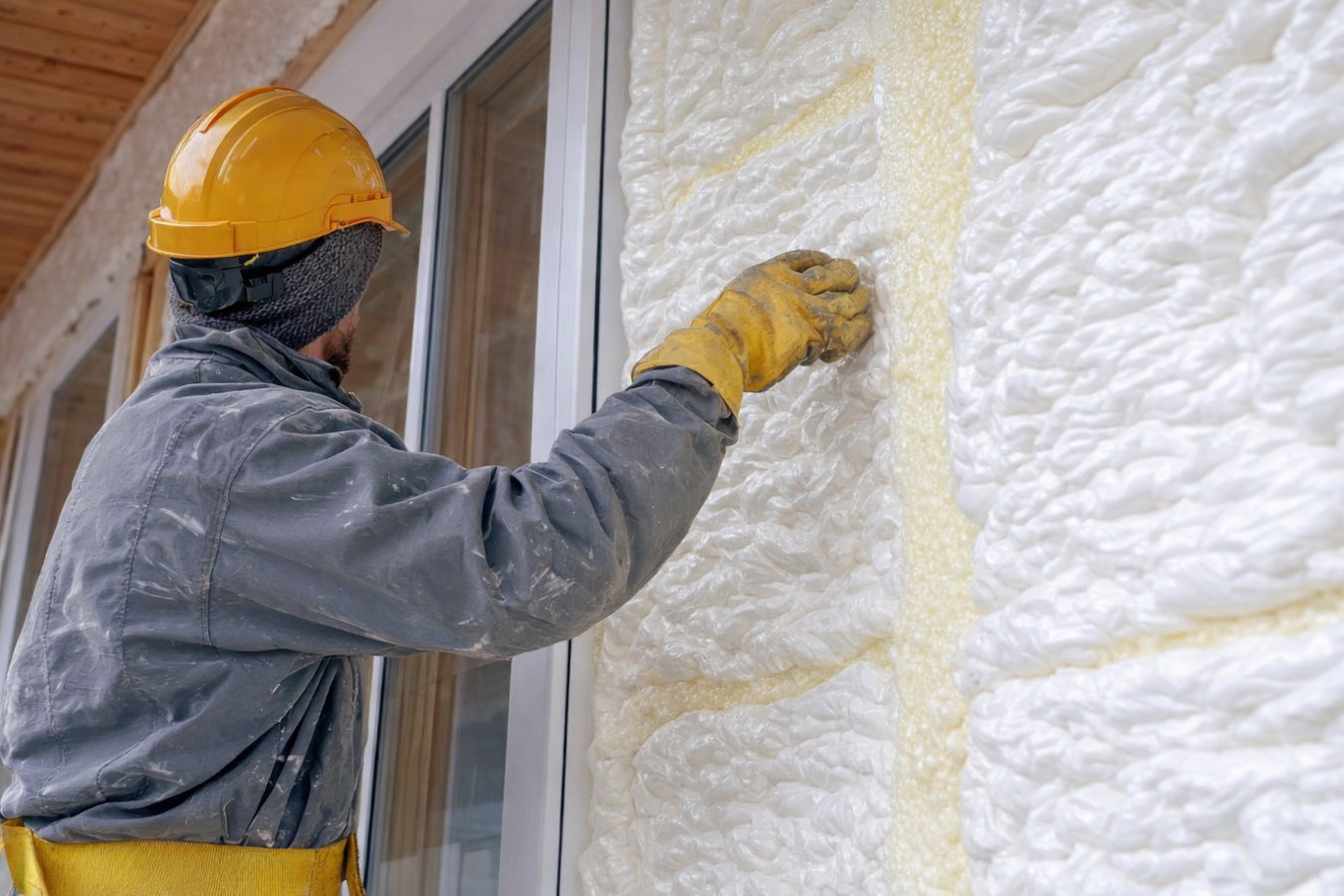
The Victorian-era homes in Saratoga Springs have original brick chimneys, complex rooflines, and framing with irregular cavities that standard batts cannot fill without leaving cold spots. Spray foam seals and insulates in one step, conforming to those irregular shapes and working in the tight spaces around penetrations that are standard in homes from this era. It is especially effective on rim joists and around attic bypasses in older construction.
Many homes on the outer edges of Saratoga Springs - the ranches and Cape Cods along Ballston Avenue and Route 50 that were built from the late 1940s through the 1970s - have original insulation that has settled significantly or was never installed to adequate depth. Retrofit insulation adds material to the existing assembly without major renovation work, bringing these homes up to a standard that reflects what a Saratoga Springs winter actually demands.
Spring snowmelt in Saratoga Springs, combined with the clay-heavy soils in lower-lying areas, means basements in older homes face real moisture pressure every March and April. Insulating the basement walls and rim joist - after a proper moisture assessment - reduces heat loss at the base of the building and helps keep the floor system above warmer and drier through the shoulder seasons.
Saratoga Springs averages 60 to 70 inches of snow per year, with temperatures that regularly drop below 10 degrees Fahrenheit in January and February and a frost line that reaches 3 to 4 feet deep in a hard winter. The freeze-thaw cycle through late fall and early spring hits concrete, masonry, and foundation walls hard - temperatures swing above and below freezing within the same 24-hour window dozens of times each year. For homes that are already losing heat through the attic, rim joist, or basement walls, that thermal cycling drives up energy costs month after month and creates conditions for ice dam damage, moisture intrusion, and frost heave on exterior flatwork. Summer brings its own pressure: warm, humid afternoons with afternoon thunderstorms that stress roofing materials and overwhelm gutters in the older neighborhoods.
The housing stock in Saratoga Springs is unusually varied, and that matters for insulation work. The streets closest to Broadway and Congress Park are lined with large Victorian and Queen Anne homes built between roughly 1870 and 1910 - wood clapboard or shingle siding, steep pitched roofs, decorative trim, and original wood windows that are genuinely drafty in a cold winter. Moving away from downtown, the streets along Route 50 and Ballston Avenue have postwar ranches and Cape Cods from the late 1940s through the 1970s, many with original insulation that has settled well below the depth it needs to be. The northern and western edges of the city, toward Wilton and along Route 9, have newer subdivisions built in the 1990s and early 2000s - homes that are now 25 to 30 years old and reaching the age when roofs and insulation systems need their first serious attention.
We work on homes and commercial buildings across Saratoga Springs and are familiar with the range of property types the city has - from the historic Victorian homes near downtown to the postwar ranches on the outer streets to the newer construction along Route 9. The City of Saratoga Springs building department handles permits for insulation work tied to renovations, and we are familiar with when a permit is required and how to coordinate inspections for both residential and commercial jobs.
Whether your property is a block from Congress Park in the downtown core, a rental near Skidmore College, or a newer home on a wooded lot east of the city, the age and style of your property shapes what kind of insulation work makes sense. Homes on large wooded lots east of downtown often have drainage and root-damage considerations that affect what we recommend for below-grade insulation. Multi-family buildings near campus see heavier use and often have deferred maintenance in the attic and basement spaces where heat loss is greatest. We serve Greenfield, MA as part of our broader regional territory and are used to covering the distance between upstate New York and western Massachusetts regularly.
The mixed seasonal character of Saratoga Springs - busy in the summer during racing season near Saratoga Race Course, quieter in the off-season - also means some properties sit lightly used for part of the year. Seasonal or part-time homes are especially vulnerable to the kind of deferred maintenance that insulation problems represent, and we can help owners assess and address those issues before they become expensive repairs.
We ask a few quick questions - the age and type of your property, which areas you want insulated, and what is prompting the call. We reply within 1 business day and can usually schedule an in-home estimate within the week.
A contractor visits your Saratoga Springs property to measure the areas, review existing insulation depth, check moisture conditions below grade, and note any wiring or structural details that affect the job. For commercial buildings, this includes a look at occupied areas and how to minimize disruption. You receive a written estimate covering scope, materials, and total cost - including a conversation about any NYSERDA programs or utility incentives that may apply.
Most attic jobs in Saratoga Springs are finished in a single day. Victorian homes with steeper roof geometry or limited attic access may take longer. For spray foam in enclosed spaces, plan to be out of the home for at least 24 hours after application. Most other insulation types allow you to stay home or keep a commercial building occupied in unaffected areas.
We walk you through what was installed, show the coverage, and provide documentation for your records. If a permit was required, we handle inspection coordination on your behalf. For commercial clients, we confirm the job meets applicable New York energy code requirements before we leave.
We serve homeowners and building owners throughout all of Saratoga Springs - the historic neighborhoods near Broadway, the postwar ranches on the outer streets, and the newer subdivisions toward Wilton. Get a free estimate and a straight answer about what your property needs.
(413) 344-2673Saratoga Springs is a city of about 28,000 to 30,000 people in Saratoga County, New York, known nationally for Saratoga Race Course and its mineral springs, and well-known regionally as one of the more desirable places to own a home in upstate New York. Home values here are significantly above the upstate New York average - median values in the range of $350,000 to $400,000 - and homeowners here tend to invest in their properties rather than defer maintenance. The neighborhoods closest to Broadway and Congress Park are lined with large Victorian and Queen Anne homes built between roughly 1870 and 1910, many featuring wood clapboard siding, steep pitched roofs, decorative trim, and full front porches. The East Side and the areas around Skidmore College have a mix of older single-family homes and rental properties. The blocks just off Broadway include a number of two- and three-family homes and older mixed-use buildings with apartments above street-level retail.
Moving away from downtown, the streets along Route 50, Ballston Avenue, and the areas near Saratoga Spa State Park have postwar ranches and Cape Cods, while the northern and western edges of the city toward Route 9 have newer subdivisions from the 1990s and early 2000s. The city draws a mix of year-round residents, seasonal visitors during racing season, and a rental population near Skidmore College - which means some properties see heavy use and others sit lightly used during the off-season. We serve all of Saratoga Springs and the surrounding area, and our work in Greenfield, MA and across the broader upstate New York and western Massachusetts region means we make the trip regularly.
High-performance spray foam that seals and insulates in one step for maximum energy efficiency.
Learn moreProper attic insulation that reduces heat loss and keeps your home comfortable year-round.
Learn moreLoose-fill blown-in insulation for quick, thorough coverage of attics and hard-to-reach spaces.
Learn moreWhole-home insulation solutions that lower energy bills and improve indoor comfort.
Learn moreSafe, efficient removal of old or damaged insulation before new installation begins.
Learn moreCrawl space insulation that prevents moisture problems and keeps floors warmer.
Learn moreInterior and exterior wall insulation to improve thermal performance and reduce noise.
Learn moreProfessional air sealing that eliminates drafts and reduces energy waste throughout your home.
Learn moreBasement insulation that controls moisture, improves comfort, and cuts heating costs.
Learn moreDense closed-cell foam providing superior R-value, moisture resistance, and structural support.
Learn moreLightweight open-cell foam that expands to fill cavities and provides excellent sound dampening.
Learn moreCommercial-grade insulation for offices, warehouses, and industrial buildings of all sizes.
Learn moreVapor barriers that protect crawl spaces from moisture intrusion and mold growth.
Learn moreProfessional vapor barrier installation to control humidity and protect your home's structure.
Learn moreTargeted attic air sealing that stops conditioned air from escaping through the roof assembly.
Learn moreRetrofit insulation upgrades for existing homes without major renovation or disruption.
Learn moreServing these cities and communities.
Saratoga Springs winters are long and the older homes here lose heat through attics, rim joists, and drafty historic walls. Fix the problem before next heating season. Call us or send a message - we reply within 1 business day.