Loading...
Serving Pittsfield, MA and surrounding areas. (413) 344-2673
Pittsfield Insulation serves Springfield homeowners with basement insulation, spray foam, and attic insulation - from triple-deckers in the South End to Victorians in McKnight to ranch homes in Sixteen Acres - backed by experienced local crews and responding with free estimates within 1 business day.
Pittsfield Insulation serves Springfield homeowners with basement insulation, spray foam, and attic insulation - from triple-deckers in the South End to Victorians in McKnight to ranch homes in Sixteen Acres - backed by experienced local crews and responding with free estimates within 1 business day.
Springfield sits along the Connecticut River, and low-lying parts of the city - particularly near downtown and the North End - see water pressure against foundation walls during spring snowmelt. Insulating basement rim joists and walls with our basement insulation service stops cold air infiltration at the foundation level and addresses the cold floors that Springfield homeowners deal with every winter.
More than half of Springfield homes were built before 1960, and most of them have attics with insulation that has settled, aged, or was never adequate by today's standards. Adding proper attic coverage reduces ice dam formation on triple-deckers and Victorian homes throughout the city, and brings down the heating costs that are a real burden on Springfield households each winter.
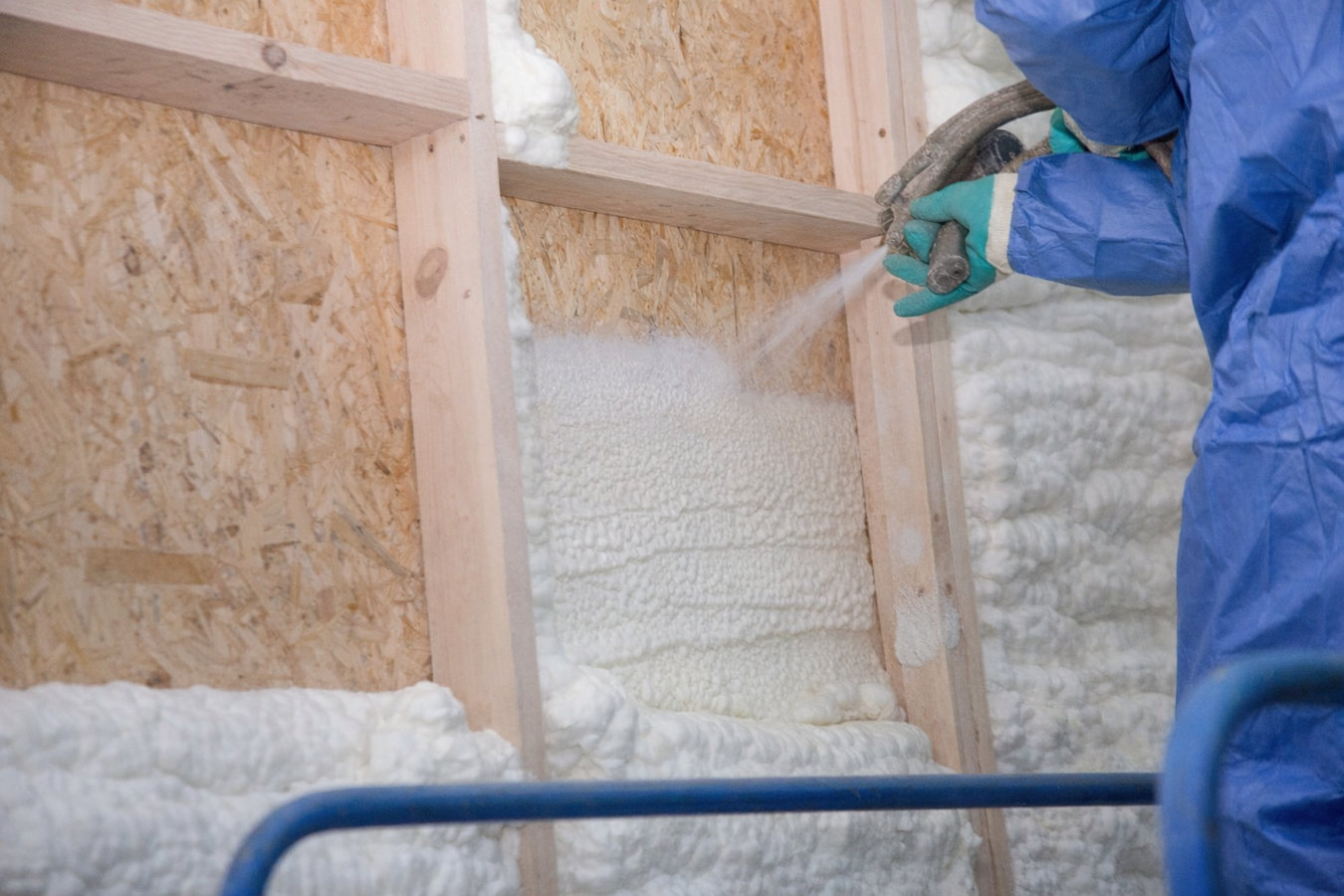
Springfield triple-deckers built between 1890 and 1930 typically have open rim joists and irregular framing connections where cold air enters at the foundation. Spray foam seals and insulates those areas in one pass, and it is well-suited to the old-growth wood framing found throughout the South End, North End, and downtown blocks where standard batt insulation does not fit cleanly.
Springfield homes built before 1960 - which is most of the city's housing stock - were commonly constructed with little or no wall insulation. Blown-in insulation fills existing wall cavities through small drilled holes with no demolition, making it the practical choice for the wood-frame homes in Forest Park, McKnight, and East Springfield where interior walls should not be disturbed.
Older Springfield homes - especially the triple-deckers and Victorian-era wood-frames - have gaps around pipes, wires, and framing connections at every floor level. Air sealing before adding insulation makes the whole system work better, and it is the step that delivers the most immediate improvement in how a home feels on a cold January morning.
Many Springfield homes have layers of original insulation that has been compressed, water-damaged from past roof leaks, or simply lost effectiveness after decades in place. Removing that old material before installing new insulation is especially important in Springfield attics that have seen multiple ownership changes and patchwork upgrades over the years.
Springfield averages about 45 inches of snow per year, and winter temperatures regularly drop below 20 degrees Fahrenheit. Frost depth in the Connecticut River Valley typically reaches 3 to 4 feet in a hard winter, and freeze-thaw cycles - days that rise above freezing and nights that drop back below - repeat throughout the winter and early spring. That combination stresses older foundations and concrete surfaces steadily each year. The heating season here runs from October through April, and for a home with poor insulation, that is six months of heat loss that shows up as real money on every gas or oil bill.
The housing stock in Springfield is one of the most varied of any city in western Massachusetts. The McKnight Historic District has hundreds of Queen Anne and Colonial Revival homes from the 1870s through 1900s - properties with original plaster walls, slate roofs, and stone foundations that require a careful hand. The South End and North End have dense blocks of triple-deckers and two-family homes built between 1890 and 1930. Sixteen Acres and East Springfield feel entirely different - postwar ranch homes and split-levels from the 1950s and 1960s on larger suburban lots. Understanding which part of the city a property sits in tells a contractor a great deal about what to expect before they arrive.
We are familiar with the permit process at the Springfield Code Enforcement office and pull permits on behalf of customers when the scope of work requires it. We have worked on properties throughout Springfield - the dense urban blocks near downtown, the larger Victorian homes in McKnight and Forest Park, and the more suburban ranch properties in Sixteen Acres and East Springfield. Each neighborhood presents a different set of access conditions, building materials, and insulation challenges that we account for from the first visit.
Springfield is the third-largest city in Massachusetts, and it is a real urban environment - tight streets, close neighbors, and homes built right up to their lot lines in the older sections. Route 291 and Interstate 91 are the main corridors we travel to reach different parts of the city, and Forest Park is a landmark that most homeowners in the south end know well. We also serve Agawam, MA, which borders Springfield to the south along the Connecticut River and has a similar mix of older homes and postwar suburban construction, as well as Chicopee, MA, which sits directly to the north and east.
We ask a few quick questions - the age of your home, which area you want insulated, and what is prompting your call. We reply within 1 business day and can typically schedule an in-home estimate within the week.
A contractor visits your Springfield home to measure the areas, check existing insulation, look for moisture issues and knob-and-tube wiring concerns, and confirm the right approach for your building type. You receive a written estimate covering scope, materials, and cost - plus a walkthrough of any MassSave rebates you may qualify for.
Most Springfield attic and blown-in jobs wrap in a single day. Spray foam applications require you to stay out of the treated area for 24 hours while the foam cures and any fumes dissipate. The crew sets up, completes the work, and cleans up before leaving - you do not need to take time off work for the work itself.
We walk you through what was installed, show coverage and depth, and provide paperwork for your records and any MassSave rebate application. If a permit was required, we coordinate the city inspection on your behalf so you do not have to manage that process.
We work across all of Springfield - McKnight, Forest Park, Sixteen Acres, the South End, and everywhere in between. Get a free estimate and a straight answer about what your home needs.
(413) 344-2673Springfield is the third-largest city in Massachusetts, with about 155,000 residents spread across a mix of urban and suburban neighborhoods along the Connecticut River. The city is home to the Naismith Memorial Basketball Hall of Fame, which honors basketball's invention here in 1891, and to Forest Park, a 735-acre green space in the city's south end that anchors one of Springfield's more residential and owner-occupied neighborhoods. The housing stock ranges from the Victorian-era Queen Anne and Colonial Revival homes of McKnight - one of the best-preserved collections of late-1800s architecture in New England - to the dense triple-deckers and two-family homes throughout the South End, North End, and downtown blocks, all the way to the postwar ranch homes and split-levels in Sixteen Acres and East Springfield.
More than half of Springfield's housing units were built before 1960, and a large share of those predate World War II. This means the typical Springfield home has original wood framing, plaster walls, limited wall insulation, and a basement or crawl space that was never sealed properly. About 60 percent of residents rent, which means property owners managing multi-family buildings are a significant part of the maintenance landscape. We serve neighboring communities as well, including Chicopee to the north and Agawam across the Connecticut River to the south.
High-performance spray foam that seals and insulates in one step for maximum energy efficiency.
Learn moreProper attic insulation that reduces heat loss and keeps your home comfortable year-round.
Learn moreLoose-fill blown-in insulation for quick, thorough coverage of attics and hard-to-reach spaces.
Learn moreWhole-home insulation solutions that lower energy bills and improve indoor comfort.
Learn moreSafe, efficient removal of old or damaged insulation before new installation begins.
Learn moreCrawl space insulation that prevents moisture problems and keeps floors warmer.
Learn moreInterior and exterior wall insulation to improve thermal performance and reduce noise.
Learn moreProfessional air sealing that eliminates drafts and reduces energy waste throughout your home.
Learn moreBasement insulation that controls moisture, improves comfort, and cuts heating costs.
Learn moreDense closed-cell foam providing superior R-value, moisture resistance, and structural support.
Learn moreLightweight open-cell foam that expands to fill cavities and provides excellent sound dampening.
Learn moreCommercial-grade insulation for offices, warehouses, and industrial buildings of all sizes.
Learn moreVapor barriers that protect crawl spaces from moisture intrusion and mold growth.
Learn moreProfessional vapor barrier installation to control humidity and protect your home's structure.
Learn moreTargeted attic air sealing that stops conditioned air from escaping through the roof assembly.
Learn moreRetrofit insulation upgrades for existing homes without major renovation or disruption.
Learn moreServing these cities and communities.
Springfield winters are long and older homes lose heat fast. Fix insulation gaps before next heating season and start seeing the savings. Call us or send a message - we reply within 1 business day.